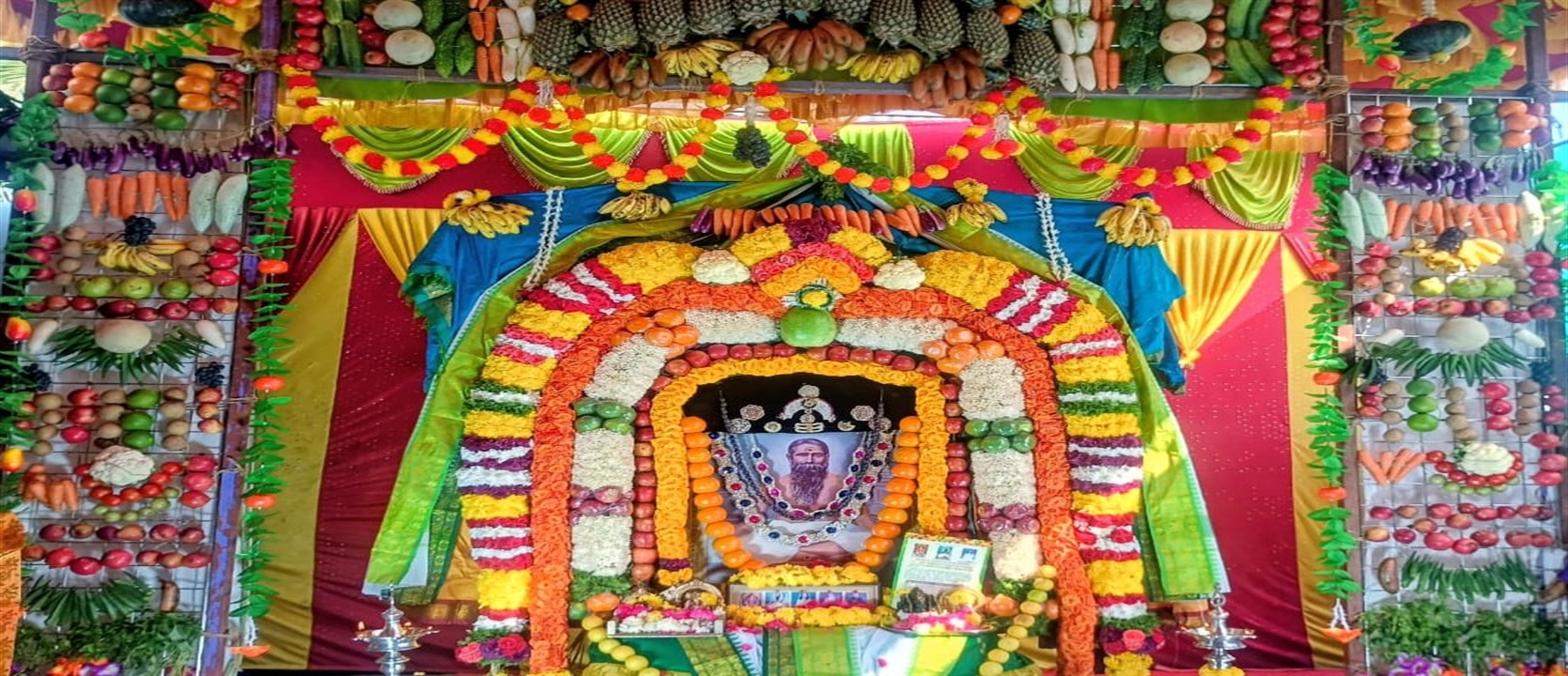
Shri Reddiapatti Swamigal
Shri Reddiapatti Swamigal, known to his devotees as Andavar and Gurunathar, lived from September 1856 to January 1923. Born into a farming family in the village of Reddiapatti in Tamil Nadu, he lived as an ordinary householder, working as an accountant in Madurai while spending his early mornings in bathing and prayer. Devotees remember him as a man of great humility, compassion and calm, who drew people to him without any show.
After years of prayer and solitary penance in the Pothigai hills, he gave the world the Arul Sattam, a simple way of life for people of every religion, caste and age. It rests on faith in one God, a pure and non-violent life, a daily dawn bath with worship and complete trust in God's grace. His devotees, spread across the world, follow the path he showed.
Also called Andavar by HIS devotees, the Guru was not content with seeking salvation for his own soul.
Andavar did penance and prayed to God for a way by which all of his fellow men would be able to reach the goal of union with God. Andavar sought for a method suited to all times, easy and simple to adopt by all, regardless of religion, nationality, age, gender and status in life.
Andavar was blessed with Paripoorna Vinayakar's (Lord Ganesh) grace and his prayer was answered. And Andavar gave the world HIS great gift of "Arulsattam" or "The Divine Law".


Born on 16 September 1856 into a Saiva farming family in the village of Reddiapatti. Named Subramaniam, he was a quiet child who loved to pray and offer flowers to Ganesha.
He farmed the family land and ran a bullock-cart trade, selling grain cheaply to the poor of his village. At 23 he left home to give his life to prayer and service.
Working as an accountant, he rose before dawn to bathe in the Vaigai and pray everyday. After a vision of Lord Vinayakar he found and installed an idol on the river bank, where the Paripoorna Vinayakar temple still stands.
After solitary penance for 12 years in a cave in the Pothigai hills, he received the fullness of God's grace and asked for a simple way anyone could follow to attain Moksha (freed from the endless cycle of rebirth). This is how the Arul Sattam came to be.
He spent his later years travelling across Tamil Nadu, spreading the Sattam. He left this world in January 1923, and devotees believe he still guides all who follow it.
An unshakeable faith in the omnipresent.
A head bath every day in cold water, taken early as part of the daily dawn routine.
No consumption of hot water; water is always taken cold.
Absolute belief in one form of the Divine, be it whatever name or form.
No abuse of any religion or faith, since every path points to the same Supreme Being.
Strict vegetarianism, no eggs even.
Abstaining from the five vices: intoxicating products (alcohol in any form, smoking and chewing tobacco), lying, lust, himsa (doing harm to anyone, including the very bad act of killing) and stealing.
No medicines. Only the holy ash (vibhuthi) and a cold water bath twice a day are used to relieve sickness.
No dependence on astrology or any form of knowing the future.
No prarthanas, amulets or lucky rings, and no seeking favours in return for a donation or a service to God.
No courts of law to settle disputes; settlement is to be reached through mutual talk and divine help.
No mourning over the dead; they are buried.
Fasting at least once a week, every Friday.
Meditating every day, either in the morning or before retiring to bed.
Total surrender to the Divine, with complete trust in God's grace in every part of life.
His benefactions are to be kept a secret; the grace a devotee receives is not made public.
